 Contributed by Trey Hess P.E., Brownfield Director and Principal, PPM Consultants
When I was with the Mississippi Department of Environmental Quality (MDEQ), I quickly learned that environmental due diligence is a bit like detective work. Every site has a story, but rarely is it written neatly in one file. Instead, the story is scattered across permits, inspection reports, enforcement letters, groundwater data, and sometimes even old handwritten memos. In Mississippi, we kept shelves of hard-copy files that required both stamina and patience to navigate. The Florida Department of Environmental Protection (FDEP), has made that job a little easier with Oculus—its online document management system.
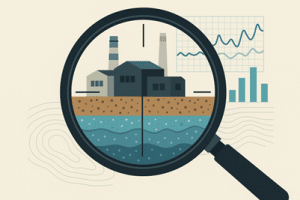
Think of Oculus as Florida’s “regulatory window.” It lets you peer into a property’s past and present to see what the walls, tanks, and soil may be hiding. For environmental consultants, that window is often the first step in protecting clients from costly surprises.
 Why Oculus Matters
In environmental due diligence, what you don’t know can cost you. A vacant warehouse may look harmless until you discover, through regulatory records, that it once stored solvents. A convenience store might boast shiny new fuel pumps, yet its legacy tanks could have left a petroleum footprint underground.
Oculus provides access to a wealth of FDEP documents, including:
- Permits for wastewater, air, and hazardous waste operations
- Inspection reports noting compliance or violations
- Enforcement actions and consent orders
- Tank closures and release investigations
- Groundwater monitoring results and remedial action plans
- Final closure determinations or “no further action” letters
For Phase I Environmental Site Assessments (ESAs), this database is invaluable. ASTM standards require us to identify recognized environmental conditions (RECs). Oculus helps confirm whether those conditions exist, have been addressed, or are still unresolved.
What the Guidance Teaches
FDEP’s published guidance on Oculus is straightforward but essential. It explains how the database is structured and how best to search:
- Collections: Documents are organized by program (Waste Cleanup, Storage Tanks, Permitting, etc.). Picking the right collection ensures you don’t miss records.
- Search Tools: You can search by facility name, address, location ID, or program ID. Alternate names matter—ownership changes often leave a paper trail of aliases.
- Filters: Narrowing results by date, county, or document type saves time when hundreds of records pop up.
- Viewing and Downloading: Most files are PDFs you can review instantly. Some are old scans that require patience, but they remain critical pieces of the puzzle.
- Tips: The guidance emphasizes cross-checking multiple collections, reviewing nearby properties, and casting a wide net before refining your focus.
In short, the guidance equips you with a map before entering what can otherwise feel like a labyrinth.
How PPM Consultants, Inc. Uses Oculus
Phase I ESAs
When evaluating properties for real estate transactions, Oculus is our go-to. Suppose a commercial database flags a former gas station. Oculus lets us confirm whether the underground storage tanks were properly closed and whether any spills occurred.
Compliance Reviews
Industrial facilities often ask us to assess their regulatory exposure. Oculus provides inspection histories, enforcement records, and permit conditions—all of which inform compliance strategies.
Contamination Assessments
If groundwater contamination is suspected, Oculus reveals past site assessment reports, soil and groundwater data, and remedial actions. These records guide our sampling and risk assessments.
Historical Research
Sometimes, the past is the biggest risk. I’ve used Oculus to uncover that a “clean” property was once a dry cleaner—a red flag for chlorinated solvent contamination. Without that record, the liability could have blindsided the buyer.
Neighboring Impacts
Oculus isn’t just about your site—it’s about your surroundings. A plume doesn’t respect property lines. Reviewing nearby facilities helps us assess whether off-site contamination could migrate onto a client’s property.
A Real-World Example
Not long ago, I assisted a client eyeing an industrial warehouse in Florida. On the surface, the site looked fine—no staining, no drums, no obvious red flags. Oculus told a different story. Buried in its digital files were enforcement actions from the 1990s for improper hazardous waste storage, followed by groundwater monitoring reports in the early 2000s.
DEP had issued a “No Further Action” letter years later, but the history mattered. I advised my client to proceed cautiously, request warranties in the purchase agreement, and account for potential institutional controls. Oculus didn’t kill the deal—it informed it.
The Limits of the Window
As powerful as Oculus is, it isn’t perfect. Some records are incomplete, some are still on paper, and others require careful interpretation. A stack of monitoring data means little without context: Is the plume stable? Has risk been mitigated? Is liability still lingering? That’s where a qualified environmental professional (QEP) steps in.
The Value of Interpretation
Anyone can search Oculus. Not everyone can interpret what they find. Does a 20-year-old enforcement action create liability today? Does a closure letter mean all risk is gone, or are there engineering controls you must maintain? Having served as a state regulator myself, I understand how agencies view these records, and I help clients read between the lines.
Full Circle: Through the Oculus Lens
When I started at MDEQ, environmental files were literal stacks of paper—sometimes dusty, always complex. Florida’s Oculus system has digitized much of that world, giving us a clearer window into a property’s history. But a window, no matter how transparent, is only useful if you know what you’re looking at.
At PPM Consultants, Inc., we use Oculus daily, but more importantly, we interpret what it reveals. We help clients see not just the documents, but the story those documents tell—past risks, present realities, and future implications.
So, the next time you hear the word Oculus, don’t just think of a database. Think of a lens. Through it, you can glimpse the environmental past, anticipate the future, and make decisions that protect both your investment and your community. And if you’re unsure what you’re seeing, PPM is here to help bring that picture into focus. Give me a call (601-956-8233) or shoot me an email at trey.hess@ppmco.com for more information on how PPM can help you simplify the complex!