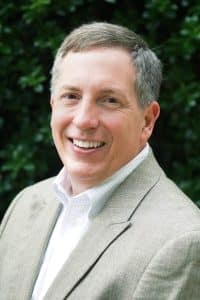
 Contributed by Trey Hess P.E., Principal, PPM Consultants
Maybe no one’s accusing this idea of sanity.
Maybe it’s not everybody’s cup of tea.
But in brownfield redevelopment,
That may be exactly the kind of thinking we need.
A Little Boldness Never Hurt
Let me start there.
I saw the movie. The 50-something “never was” builds the team, wins the race, and walks off like he still has a few laps left in him. There is something about that storyline that sticks, because it is not really about racing. It is about seeing the track differently than everyone else and being willing to take a line most people would not.
Calling for a shift in how Gulf South states handle environmental liability is not exactly the safe position. It is not how these programs have traditionally been built. But it is grounded in a reality that anybody who works around real estate transactions already understands.
Deals move fast. Liability protection usually does not.
As a former regulator, I understand why agencies operate the way they do. They are built to protect the public, create defensible records, and keep the process transparent. That is their job.
But they are not built around 60-day due diligence periods, lender deadlines, seller pressure, or purchase agreements that need to close before the end of the quarter. That disconnect shows up in deals all the time.
If redevelopment is a race, and in many ways it is, most Gulf South states are still sending buyers in for a full pit stop when all they really needed was fuel.
The Due Diligence Standard Is Not the Problem
All Appropriate Inquiries, or AAI, is not some abstract regulatory idea. It is the standard that governs how environmental due diligence is done across the country. In the field, it usually comes down to a well-executed Phase I Environmental Site Assessment prepared following the ASTM E1527 Standard which the marketplace already understands.
That last part matters. A good Phase I ESA is not just a report in a closing file. It is the way buyers, lenders, attorneys, consultants, and agencies establish what is known, what is reasonably knowable, and what risk is being taken on.
We have talked about commercial environmental due diligence plenty of times, but the point here is simpler: the market already has a consistent, defensible way to evaluate environmental risk. It is not perfect. Nothing in this business is. But it works.
Which makes the next question hard to ignore.
If we already have a nationally recognized due diligence standard, why do so many states require buyers to enter a formal program, pay fees, wait on a separate process, and create a public-facing record just to establish liability protection when no cleanup is even on the table?
Ohio Did Not Reinvent the Wheel. It Just Moved It.
Ohio looked at that same question and took a different approach.
It did not replace its voluntary cleanup program. It did not strip away protections or tell regulators to look the other way. Ohio added another option, and that is the important part.
Under Ohio Revised Code Section 3746.122, a purchaser that meets the federal bona fide prospective purchaser criteria and satisfies the required continuing obligations can assert a state-level defense without first entering the voluntary cleanup program. No application. No waiting period. No separate track just to confirm what the due diligence already established.
On paper, that sounds like a legal adjustment. In practice, it removes a layer of friction that can slow down transactions that otherwise should move.
That is the part worth copying. Ohio let the diligence process drive the timeline instead of forcing the regulatory process to do it every time.
The Gulf South Is Still Running a One-Lane Track
Back in the Gulf South, we are still largely operating in a one-lane system.
Alabama is a good example of a program that can work well. Its brownfield approach provides meaningful liability protection, including protection from third-party lawsuits, but buyers still get there through participation in a structured program. Mississippi follows a similar path. To obtain liability protection, you enter the Brownfield Program, negotiate an agreement, and work through a defined process that includes public notice. Even then, Mississippi does not provide the same explicit third-party protection Alabama offers.
Louisiana, Florida, and Georgia each have their own versions of the same general idea. Different names. Different mechanics. Same basic answer: if you want protection, come through the program.
There is nothing inherently wrong with that. These programs are essential for sites that require cleanup, land use controls, public funding, or long-term management. PPM’s brownfield redevelopment work depends on these tools when the site actually needs them.
The problem is what happens when the program is the only option.
For a lot of acquisition-driven deals, the issue is not whether contamination exists. The issue is whether the process around that risk fits the transaction. Costs increase. Timelines stretch. Disclosure becomes part of the negotiation whether it needs to be or not.
And suddenly a straightforward diligence question turns into something bigger, slower, and sometimes harder to explain to the buyer.
What a BFPP Fast Lane Would Actually Do
That is where the idea of a BFPP Fast Lane comes in.
Not as a replacement for existing brownfield programs. As a second lane.
The concept is simple enough: take the federal BFPP framework, tie it directly to AAI, and recognize it under state law as a self-executing defense. No required program entry. No separate approval step. No need to turn every transaction into a brownfield agreement when the buyer is not asking the state to manage a cleanup.
That does not mean removing guardrails. Continuing obligations still matter. Responsible ownership still matters. If a buyer exacerbates contamination, ignores institutional controls, blocks access, or misrepresents conditions, protection should not hold. Any well-drafted statute ought to make that plain.
But for buyers who are doing the work correctly, the system should not require an extra layer just to validate what the law already intended to protect.
Why This Matters in Actual Deals
From a practical standpoint, this is not about making things easier for the sake of ease. It is about making the liability framework match the way transactions actually happen.
When protection lines up with the due diligence process, deals move more efficiently. Transaction costs are easier to manage. Developers are more willing to take on complicated properties. Lenders have a cleaner story. Agencies can spend more time on sites that truly need oversight instead of processing paperwork for deals that are not seeking a remedy.
We see this in real projects often enough. The difference between a deal that moves and a deal that stalls is not always the environmental condition itself. More often, it is how the condition gets handled inside the process.
That is not theory. That is the part you learn after sitting through enough closing calls.
For communities trying to compete for redevelopment capital, that kind of alignment matters. So do related tools, including brownfield grant applications and management, but grant funding and voluntary cleanup programs should not be the only doors into responsible reuse.
The State That Builds the Second Lane Wins
After enough of these deals, the question starts to feel pretty simple: why does responsible due diligence still feel like it needs permission?
Ohio’s answer is that it does not.
The market already understands AAI. The federal system already defines BFPP. Ohio aligned its state law with that reality and let redevelopment move closer to the pace of commerce.
If Mississippi, Alabama, Louisiana, Florida, and Georgia want to compete for redevelopment capital, and they are competing whether we say it out loud or not, this is one of the clearest ways to do it.
Because in the end, this is a race.
You do not win by sending every driver through the pit lane.
You win by building the fastest track.
So no, maybe no one is accusing this idea of being the safe one. Maybe it is not everybody’s cup of tea.
But it is factual enough to deserve a hard look.
And the first Gulf South state to build a real BFPP Fast Lane?
That is the one that wins the race!
If you’d like to discuss the best lane for your project, give me a call or shoot me an email at Trey.Hess@ppmco.com; or if you’d like to see more articles like this on a weekly basis, consider subscribing to the PPM Environmental Journal. Click HERE to subscribe.