

 Contributed by Mike McCown, Principal, PPM Consultants
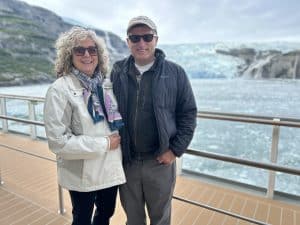
My wife and I recently had the opportunity to spend a few weeks on an Alaskan vacation. When I first arrived, I thought I was coming to see the wilderness. I did – towering glaciers, endless spruce forests, salmon streams cutting through valleys. But what surprised me most was the other presence woven into this landscape: the Trans-Alaska Pipeline (TAPS), or as the locals call it “The Pipeline”. Standing at its terminus in Valdez, I realized this steel river isn’t just about oil -it’s about how one state helped shoulder the weight of powering a nation, while living with the costs and choices that come with it.
Few projects symbolize the intersection of energy, economy, and environment as profoundly as TAPS. Stretching 800 miles from Prudhoe Bay on Alaska’s North Slope to Valdez on Prince William Sound, the pipeline is both an engineering marvel and a key artery in America’s energy landscape. TAPS was constructed under some of the harshest conditions imaginable: below-zero temperatures, permafrost, mountain ranges, and earthquake-prone regions. Half of it is underground and the other half aboveground. It was humbling to see how human engineering adapted to the natural environment, rather than simply cutting through it. While oil production inevitably carries risks, Alaska’s industry is subject to some of the most rigorous environmental safeguards in the world. From the monitoring stations to the spill-response infrastructure in Valdez, it was evident that protecting this fragile environment is taken seriously.
While visiting I learned that oil production remains one of the state’s most important economic drivers. Since its inception in the 1970s, TAPS has transported over 18 billion barrels of oil, generating billions in tax revenues that support public services, infrastructure, and Alaska’s Permanent Fund, which pays annual dividends to residents. Oil-related jobs—direct and indirect—have sustained thousands of Alaskan families for decades. As I spoke with locals during my visit, it became clear how deeply tied oil revenues are to everyday life here. From schools in small towns to healthcare facilities and transportation infrastructure, the benefits of oil development reach into nearly every community in Alaska.
Alaska oil has long contributed to reducing U.S. dependence on foreign energy. Though production has declined since its peak in the 1980s, the pipeline still transports hundreds of thousands of barrels per day. In an era of energy transition, oil remains a vital part of the mix, and Alaska continues to play a role in U.S. energy independence. Visiting Valdez reminded me that this is more than just a local project. Its position as a deepwater port on the Pacific gives the U.S. not only access to Asian markets but also strategic control in global trade and naval supply routes.
Driving along the Alaskan roads, I couldn’t help but reflect on the wilderness TAPS crosses—forests, rivers, and wide-open tundra. Concerns about caribou migration, salmon streams, and wilderness preservation have been debated since construction. Decades of data seem to indicate that most negative impacts have been local, and overall wildlife populations appear to have adapted to the infrastructure in most cases. Seeing caribou and bears not far from the pipeline underscored that coexistence, while imperfect, is possible. This is not to discount the occurrence of the 1989 Exxon Valdez oil spill, an ecological disaster from which the Prince William sound is still recovering from. And then there are the potential climate change issues. Oil contributes to greenhouse gas emissions, and Alaska itself is experiencing some of the fastest warming in the U.S. Yet as I reflected while standing at Valdez’s harbor, producing oil under Alaska’s strict regulations may be preferable to shifting supply to less-regulated regions with higher emissions intensity.
In many ways, Alaska’s pipeline story resonates with the broader national conversation about energy today. The EPA’s “Powering the Great American Comeback Initiative” emphasizes two central goals: ensuring clean air, land, and water for every American, and restoring American energy dominance. Standing in Valdez, I could see both imperatives at play – the demand for secure, domestic energy and the constant vigilance required to protect one of the most fragile and extraordinary environments on Earth. There is also ongoing discussion about new drilling in the ecologically sensitive areas east and west of Prudhoe Bay (National Petroleum Reserve- Alaska and the Arctic National Wildlife Refuge). While production from legacy fields has declined, new exploration and drilling approvals are being debated as a way to extend the life of the pipeline and maintain Alaska’s role in U.S. energy security. Supporters argue that opening additional drilling sites will create jobs, bolster tax revenue, and ensure that TAPS continues operating efficiently – because the pipeline requires a minimum daily throughput to remain viable. Opponents, however, point to the risks of disturbing fragile Arctic ecosystems and the contradiction of expanding fossil fuel production at a time when the nation has been working toward decarbonization. It’s easy to understand the tension: the North Slope, a place of stark, pristine beauty, yet one that sits atop vast untapped reserves. The decisions made here in the coming years will likely ripple far beyond Alaska, shaping not only the state’s economy but also national energy policy.
Alaska now stands at a crossroads. Oil production is declining, renewable energy projects have been emerging, and the state faces choices about diversifying its economy. Yet, for the near future, the Alaska pipeline remains indispensable—not only as infrastructure but as a symbol of how energy development can coexist with under some of the strictest environmental safeguards in the world. For me, visiting Alaska was more than a vacation to see wilderness – it was a reminder of the complex relationship between people, industry, and nature. Looking out at the beautiful waters of Prince William Sound with tankers in the distance, I felt the weight of that balance: a place of breathtaking beauty, supported in part by the lifeblood of oil flowing quietly from the far north.